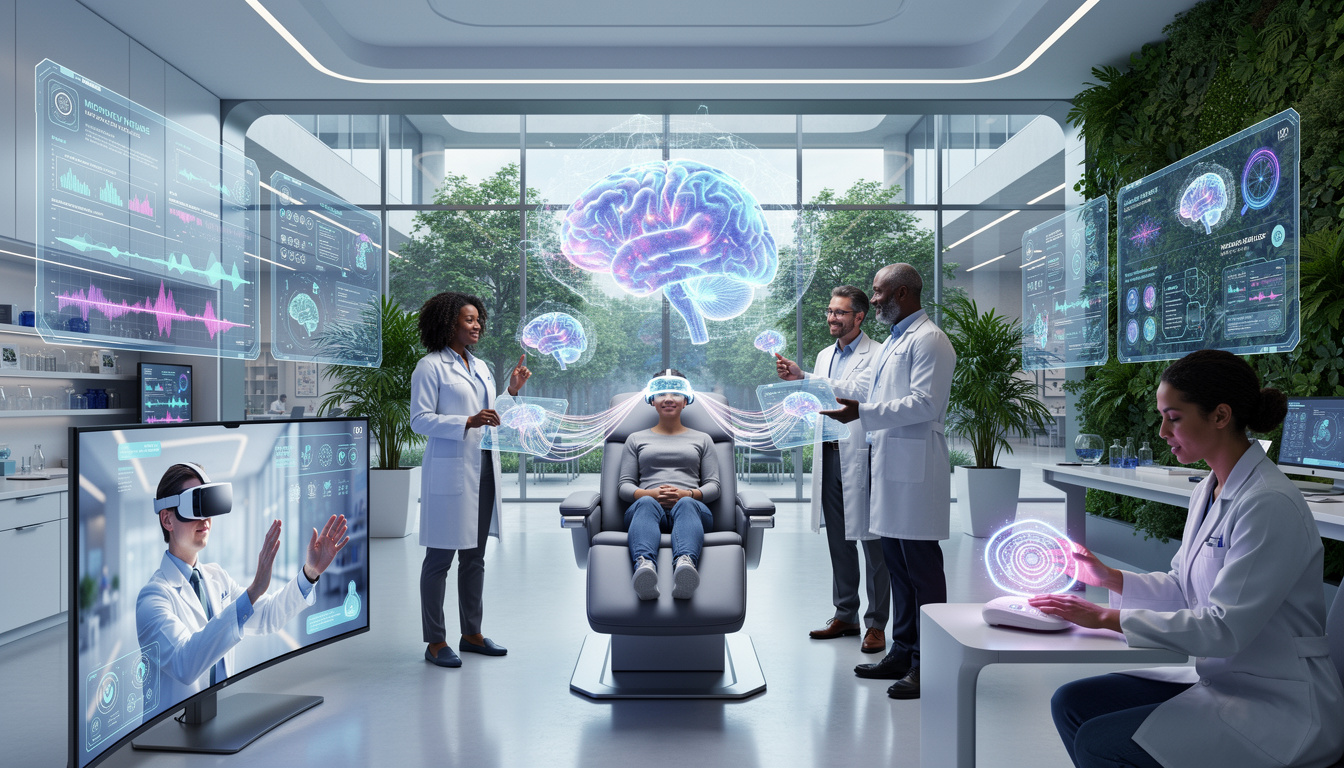
Psychology has never been more vibrant than in this post-2025 era! Social and technological upheavals, the democratization of mental health, and the rise of artificial intelligence are redefining what we once thought was established knowledge every day. Between new trends in cognitive psychology, the surge in online psychotherapy, and a passion for mental well-being, the discipline is taking hold of our daily lives like never before. Professionals are adapting, tools are flourishing, and everyone, from patients to clinicians, is participating in this dynamic explosion. Welcome to the era of Psychology 2.0, where brain science, behavioral data, and positive psychology converge: a cocktail of innovations that is permanently changing the way we understand, prevent, and treat disorders of the human mind and behavior.
- 🔬 Democratization of digital therapies and remote consultations throughout France
- 🤖 Growing impact of artificial intelligence on diagnosis and intervention
- ✨ Rise of positive psychology and mental well-being prevention
- 💡 Massive use of behavioral data for personalized interventions
- 🌍 Growing recognition of cultural diversity and inclusion issues
- 🔗 Increased collaboration between neuroscience, cognitive psychology, and technology
📝 Need for rigorous psychological ethics in the face of new challenges
Digital revolution: Therapy 2.0, driving the transformation of modern psychology Since 2025, psychology has been evolving at breakneck speed thanks to the digitalization of healthcare and the rise of digital therapies. Traditional in-office consultations now coexist with innovative tools, where every click can represent a decisive step towards well-being. Through the story of Pauline, a young professional living in a rural area, it’s easy to grasp the scope of this digital revolution.
Lacking readily available professionals, Pauline opted for online psychotherapy, discovering invaluable flexibility: flexible scheduling, immediate access to neuroscience-based techniques, and regular follow-up without the constraints of travel.
Advances in cognitive psychology have led to a proliferation of mobile applications and digital therapy platforms, enabling real-time monitoring of symptoms as well as detailed analysis of behavioral data. For example, mHealth tools allow for daily self-assessment of mood, facilitating the early detection of relapses in disorders such as depression or anxiety. The collected, anonymized, and aggregated data fuels large-scale research, enriching scientific understanding and informing therapeutic recommendations.
The impact of artificial intelligence on psychology is also felt in the automation of certain processes—such as initial behavioral assessments or exercise suggestions. However, far from replacing human interaction, these tools complement personalized support by freeing up time for active listening and the collaborative development of individualized solutions.
The advantages and limitations of remote consultations
https://www.youtube.com/watch?v=F7OCgFJVNaM
Professionals must constantly update their skills to integrate these changes and offer relevant support tailored to different issues. This fundamental shift is leading psychology to reinvent itself, without ever losing sight of the core of the profession: the empathetic and individualized support of each patient. Artificial intelligence and behavioral data: the new landscape of psychological care
The explosion of behavioral data from digital technologies is radically transforming the methods of modern psychology.
mHealth applications, self-monitoring platforms, and automated interaction analysis are paving the way for unprecedented personalization of treatment protocols. Simultaneously, artificial intelligence is refining the detection of disorders thanks to its ability to identify subtle patterns in patients’ texts, voice, and digital behavior.
- The fascination with these tools should not obscure the fact that their performance relies on the quality and diversity of the data collected. Thus, the use of Big Data in psychology provides a comprehensive view of the evolution of mental health in different populations, but requires consideration of each individual’s context to avoid overgeneralization.
- Concrete examples of AI use in psychology
🧠 Early detection of depression through automated language analysis on social media 📊 Personalized progress tracking through the cross-analysis of sleep, physical activity, and mood data🤖 Real-time suggestions for tailored exercises in digital therapies
For example, some French startups are combining artificial intelligence with insights from cognitive psychology to offer
tools to aid memory and attention management
The results obtained help both patients and clinicians, who can adapt the therapeutic approach according to evolving needs.
A crucial step, the integration of AI into the healthcare system necessitates a discussion around psychological ethics: transparency of algorithms, combating digital bias, and protection of sensitive data. Both professionals and patients are calling for robust safeguards to prevent abuses and ensure that technology serves humanistic objectives.
- In the future, AI could not only predict periods of risk for vulnerable individuals but also influence the organization of consultations by adapting the pace of sessions or virtual interventions based on behavioral patterns.
Concrete applications and essential resources
| 😊 Integrating positive psychology exercises into traditional therapies | 🌟 Online workshops on managing emotions, happiness, and mindfulness | 📚 Practical guides dedicated to positive psychology and personalized recommendations |
|---|---|---|
| To delve deeper into the subject, a look at | the scientific foundations of positive psychology | helps to understand why this approach appeals so much to patients seeking comprehensive solutions that are genuinely forward-looking. |
| Societal demand is high, as evidenced by the proliferation of psychological support apps and the widespread implementation of prevention programs in schools and businesses. These initiatives help reduce the stigma surrounding mental health disorders and encourage everyone to adopt behaviors that promote mental health in their daily lives. | 📊 Approach | |
| Key Benefits | Target Audience | Digital Therapy 🤖 |
Accessibility, personalized follow-up, time savings
Active adults, rural areas
Positive Psychology 😊 Overall well-being, practical tools, prevention
General public, businesses, schools
Virtual Intervention 🎮
Security, immersion, flexibility
- Phobias, anxiety disorders, adolescents
- This mental well-being revolution is characterized by its holistic approach, a successful combination of prevention, rapid intervention, and human resource development.
- Diversity, inclusion, and ethical renewal: the new benchmarks of psychological practice
- 2025 marked a turning point in the demand for inclusion and diversity in psychology.
Gone are the days when the discipline focused almost exclusively on a standardized sample – young, Western, urban, and affluent. Professionals, inspired by resolutely open research, are now integrating social and cultural plurality into the very design of their studies and practices. For example, incorporating the voices of older adults, people from rural areas, or those belonging to minority groups significantly enriches our understanding of psychological trajectories and facilitates more tailored interventions. This shift has been made possible by the gradual abandonment of overly standardized assessment tools in favor of participatory approaches and a nuanced adaptation to realities on the ground.
A closer look at inclusion and cognitive psychology
This new requirement also raises the question of translating models from cognitive psychology into diverse contexts. Tests and intervention protocols are adapted to take into account factors such as age, language, culture, and lived experience. Initiatives are multiplying: specific support groups, intersectional studies, multicultural screening tools, and diversity awareness campaigns in university programs.
🌍 Diversification of research samples
👵 Full integration of older adults in prevention
🏳️🌈 Sensitivity to LGBTQ+ and gender issues
🗣 Linguistic and contextual adaptation of interventions For those wishing to delve deeper into the concept of applied diversity and its impact on everyday behavior, this dossier on the psychology of everyday behavior
- is a valuable resource.
- In parallel, the growing importance of ethical debate necessitates the adoption of clear ethical frameworks to protect each individual: renewed consent, anonymization, and then the valuing of minority voices in the co-creation of therapeutic programs.
New frontiers: neuroscience, interdisciplinarity, and innovations for tomorrow The alliance between cognitive psychology, neuroscience, and digital health is the driving force behind current research. Regularly, mixed teams combining neurobiologists, data scientists, and therapists develop new tools for the detection, prediction, and prevention of mental health disorders.
Recent breakthroughs in neuroimaging, coupled with artificial intelligence, are paving the way for precision psychological medicine, where brain biomarkers allow for the most appropriate intervention method to be guided from the very first consultation. Pilot projects are already using virtual reality in the treatment of phobias or post-traumatic support, offering patients a safe space to practice facing their fears.
When interdisciplinarity rhymes with progress
Far from the turf wars of the past, specialists are now joining forces to ensure better continuity of care and maximize the usefulness of scientific discoveries. Thus, a business leader can be guided toward validated anxiety management techniques while benefiting from innovations stemming from neuroscience research. This constant enrichment revitalizes the discipline and ensures that recommendations for both professionals and individuals are always up-to-date.
🧬 Use of brain imaging for personalized therapies
🎮 Deployment of virtual intervention in neurorehabilitation
📈 Integrated programs combining mental health, physical activity, and cognition
👩⚕️ Cross-disciplinary training for psychologists and neuroscientists
The discipline also continues to embrace popularization through platforms that help people understand key concepts in contemporary psychology and encourage the general public to take charge of their own mental health.
In conclusion to this renewed dynamic, modern psychology is placing great emphasis on psychological ethics, responsible innovation, and attention to the uniqueness of each individual. This is a movement to follow closely in order to sustainably transform our relationship to health, knowledge, and others.
How do digital therapies differ from traditional support?