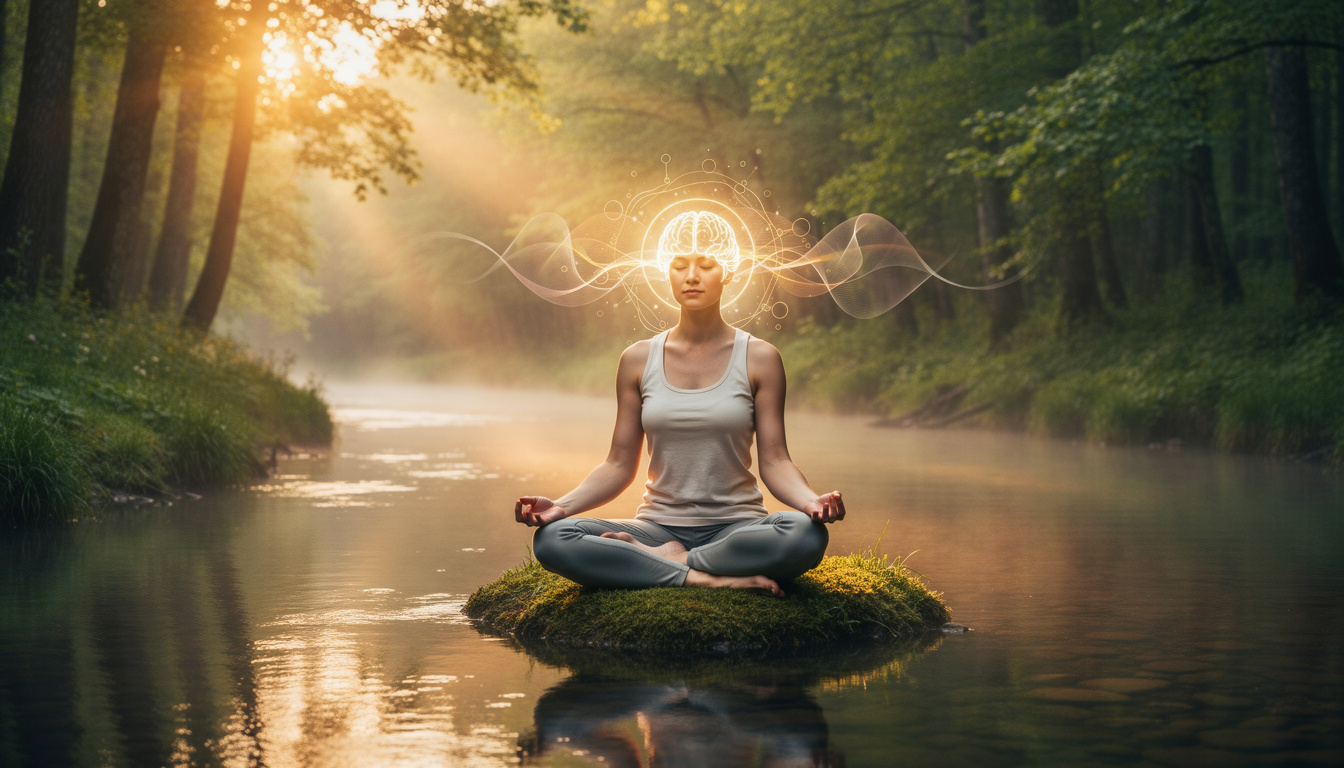
Meditation has become an essential ally for mental well-being. Praised by both scientific psychology and personal development enthusiasts, it reveals powerful transformative effects that go far beyond mere trendy rhetoric. Practicing meditation offers your mind a space for listening and regulation, fueled by burgeoning research on neuroplasticity and emotional management. Whether it’s to soothe anxiety, promote better mental health, or strengthen focus, the benefits are both tangible and accessible. Employers and healthcare facilities alike are embracing this trend and now integrate meditation modules into their offerings to improve everyone’s quality of life. Let’s take a closer look at the secrets revealed by contemporary psychology and the proven ways to make the most of mindfulness in everyday life, far removed from preconceived notions!
- 🧠 Remarkable improvement in mental health: stress reduction, increased psychological resilience, prevention of depressive relapse.
- 🌱 Positive neurobiological effects: Increased gray matter, amygdala regulation, and brain network optimization.
- 😌 Enhanced emotional management: The ability to identify, understand, and channel emotions through practice.
- 💼 Impacts on the professional world: Improved concentration, productivity, and team dynamics.
- 🏆 Universal accessibility: A variety of techniques, routines adapted to all schedules, and noticeable results within the first few weeks.
- 📊 Scientific validation: Solid empirical evidence supporting the benefits for anxiety, memory, and overall well-being. The effects of meditation on the brain: Key discoveries in psychology and neuroscience
Meditation is no longer the preserve of spiritual schools. It now fascinates neuroscientists, and for good reason! Recent studies show that the benefits of meditation are physically measurable in the human brain. Like an orchestra finding its harmony, certain brain regions become more efficient in regular practitioners.
According to research conducted since 2010 and regularly updated until 2026, the prefrontal cortex, an area associated with self-control and planning, sees an increase in gray matter. This results in a decrease in impulsive reactivity and an increase in emotional balance. The amygdala, the brain’s nerve center for anxiety, experiences reduced activity, generating lasting calm even during stressful periods. This transformation is accompanied by an improvement in neuroplasticity: the brain learns to better connect its different parts, fostering a sense of mental clarity and serenity. EEGs reveal an increased presence of theta and gamma waves, symbols of heightened attention and openness to learning. Studies of the renowned Mindfulness-Based Stress Reduction (MBSR) program, implemented in numerous European hospitals, indicate increased connectivity between the hippocampus (memory, stress management) and other frontal lobe areas. Practitioners report an improved ability to concentrate and respond appropriately to the demands of daily life. Here is a table summarizing some mutations observed in regular meditators:
🧩 Neurological Element Before meditationAfter meditationGray matter (hippocampus)Normal
Enhanced 📈 Amygdala activity High 😨
Reduced 🌿
Neural connections
| Fragmentary | Optimized 🔗 | Gamma waves |
|---|---|---|
| Weak | Emphasis ⚡️ | At the crossroads of science and practice, these developments demonstrate the profound brain restructuring facilitated by meditation. To learn more about the impact on cognition and memory, the website |
| psychologie-blog.fr/psychologie-cognitive-memoire/ | offers an insightful analysis. | Regular Practice: Clémence’s Scenario |
| Clémence, a dynamic manager, was introduced to mindfulness during a corporate workshop. In three months, she noticed a significant improvement in her concentration, a reduction in emotional reactions during tense meetings, and an enhancement of her memory. The tensions she experienced at work subsided, perfectly illustrating these laboratory observations in the concrete context of professional life. | https://www.youtube.com/watch?v=QBXvxA_maZo | |
| Meditation and Stress Management: A Path to Emotional Balance Validated by Psychology | With the frenetic pace of our lives and increasing digitalization, stress management has become a public health priority. The benefits of meditation in this area are now supported by numerous psychological and medical studies. Did you know, for example, that by 2025, more than one in five adults suffered from chronic stress, severely impacting their sleep, cognitive abilities, and quality of life? The practice of mindfulness allows us to focus on the present moment, reducing rumination and anxious anticipation. This has tangible effects on cortisol levels (the stress hormone), as studies conducted in mental health units in recent years have shown. We then observe: | 🛌 Improved sleep quality, sometimes in addition to |
melatonin or other natural supplements 🧘♂️ Reduction in anxiety disorders, sometimes making it possible to reduce the use of
Hydroxyzine
or other anxiolytics
🔄 Improved mental recovery after a busy day
In a professional setting, meditation is often associated with a reduction in burnout and a more harmonious perception of working relationships. Employers observe a decrease in absenteeism, an increase in positive conflict resolution, and greater emotional stability within teams. Psychology encourages the integration of these techniques through workshops or online modules. Numerous testimonials converge: it becomes more natural to acknowledge one’s emotions, to take a step back, and to avoid the spiral of harmful thoughts.To delve deeper into the link between stress, health, and happiness, the article
Positive Psychology and Happiness
- explores this vast subject in light of recent data. Concrete example: anti-stress routine
- A manager offers a group mindfulness session every lunchtime. The result? The work environment becomes more peaceful, and crisis meetings give way to constructive dialogue, with everyone feeling more listened to and ready to tackle daily challenges together. https://www.youtube.com/watch?v=1IRAM-enJNg
- Meditation, Relapse Prevention, and Emotional Stability
- The effectiveness of meditation in preventing relapse of depression is now a widely recognized asset in treatment. While it is not intended to replace medication, it is an essential complement during the recovery phase. Mindfulness programs allow people who have experienced depression to acquire new tools to cope with moments of emotional vulnerability.
Research continues to show a significant decrease in rumination and improved emotional regulation in patients engaged in this approach. Unlike some medications, meditation can be integrated without side effects or contraindications, offering gentle support for mental health.
⚖️ Enhanced regulation of negative emotions ✈️ Gaining perspective on recurring or intrusive thoughts 🌱 Improved self-esteem and increased psychological resilience
⏳ Reduced long-term dependence on medication
The challenge of post-depressive support lies in maintaining lasting emotional stability. Meditation, as a cumulative practice, helps establish a beneficial routine that supports internal psychological resources. Mental health professionals recommend combining it with breathing exercises, body scans, and mindfulness to solidify these benefits. Additional resources can be explored on
for those who wish to delve deeper into emotional stabilization. The testimony of Vincent, a former patient, attests to a gradual return to a more fulfilling life, where managing emotions becomes less laborious and more spontaneous thanks to his daily meditation routine. His loved ones have also noticed an improvement in his overall mood and an increased ability to cope with everyday hassles without succumbing to negative thoughts.
Synergy between meditation and psychotherapy
In the context of modern psychotherapeutic approaches, meditation integrates perfectly into resilience strategies. Many clinics value this combination, offering their patients personalized support that addresses both medical needs and emotional well-being.
- The Different Meditation Techniques and Their Specific Effects on Mental Well-being
- The world of meditation is not limited to a single practice. Many modalities exist, each offering benefits tailored to the needs of the participants:
- 🌬️
- Breath Meditation
: ideal for anchoring attention and establishing immediate calm ☁️ Body Scan
: mindful practice that helps release bodily tension, perfect for stress management
💬
Mantra Meditation
: promotes concentration and psychological perseverance
🚶
- Walking Meditation : develops sensory grounding and mindfulness in motion 💖
- Loving-Kindness (metta) : cultivates compassion and the quality of interpersonal relationships Each technique has its own specific characteristics. Therefore, those who wish to explore managing habits or automatic behaviors can consult
- psychologie-blog.fr/psychologie-comportements-quotidiens/ to discover how mindfulness influences mental and physical routines. Integrating meditation into a daily routine requires personal experimentation. Some platforms recommend alternating practices in the first few months before choosing the one that provides the best mental and physical benefits. The list below summarizes some key tips:
- 🕰️ Practice at the same time every day, even if only for five minutes 🔊 Use audio or video guides to get started without pressure 🎯 Set realistic goals and observe how your experience evolves
- 📝 Record your sensations in a journal to track your progress 🤸 Test postures or movements that suit your body According to feedback, alternating between guided and unguided sessions strengthens the ability to meditate alone, while also benefiting from the group dynamic, whether in person or virtually, depending on individual preferences. A popular discussion thread on a wellness forum highlights the effects of guided meditation on sleep quality; examples can be found on
mental well-being techniques. 🎧 Technique
Suggested Duration
- Observed Benefits
- Guided Meditation
- 5-10 min
- Less stress, increased focus ⏳
- Mindfulness
10-20 min Emotional regulation 🧘Body Scan
| 15 min | Physical relaxation, sleep 🌙 | Loving-Kindness |
|---|---|---|
| 10 min | Increased empathy and kindness 💗 | Towards a practice adapted to every lifestyle |
| The strength of meditation lies in its diversity; everyone can adjust their ritual according to their constraints and expectations. This is the secret to permanently transforming your attitude towards the stress and hustle and bustle of the modern world. | Meditation and emotional intelligence: a direct impact on relationships and quality of life | |
| Meditation doesn’t just work on the isolated individual. It also transforms how we relate to others, assert our needs, and manage conflict. By refining our emotional management, it improves emotional intelligence, the foundation of all constructive human relationships. Learning to recognize, accept, and express our feelings helps avoid unnecessary tension, ease disagreements, and establish greater clarity in communication. Exercises in empathy and meditative kindness often lead to superior listening skills—a valuable asset both at home and at work. | 👂 Improved active listening to the needs of others | |
| 🏡 Reduction of family conflicts and marital tensions | 🧑💼 Strengthening of the sense of belonging in professional or community groups | 🤝 A climate conducive to collaboration and collective creativity |
If you wish to delve deeper into understanding these internal mechanisms, find further insights at
psychologie-blog.fr/mécanismes-défense-psychologique/
, which details the connection between emotional experience, stress, and overall well-being through mindfulness meditation.
The experience of Sami, a young teacher, illustrates how the practice has transformed the dynamics of his classroom: less restlessness, more voluntary exchanges, and a constructive atmosphere where each student feels heard and respected. Thus, meditation permeates the entire social fabric, from close circles to large organizations. Combining autonomy, listening, and empathy through mindfulness
Emotional intelligence, developed through meditation, prepares individuals to better navigate periods of doubt, to bounce back from challenges, and to remain open to diverse perspectives. It is a discreet, yet often spectacular, promise in both personal and collective transformation.
- What are the proven benefits of meditation on mental health?
- The benefits include stress reduction, prevention of depressive relapse, improved emotional regulation, and increased psychological resilience, according to recent studies.
- Can it be used as the sole treatment for depression or anxiety?
Meditation acts as a support and preventative measure, but it is not a substitute for the medical or psychotherapeutic treatments that are essential for severe disorders. Do you need years of practice to feel the effects of meditation?Not at all! Many benefits appear within just a few weeks: greater calmness, enhanced focus, and improved emotional recovery. Regularity is more important than the length of each session.
What is the best technique for starting meditation?
It is advisable to begin with guided meditations or simple mindfulness exercises. The important thing is to try several approaches to find the one that best suits your pace and needs.
Is the use of meditation regulated by modern psychology?