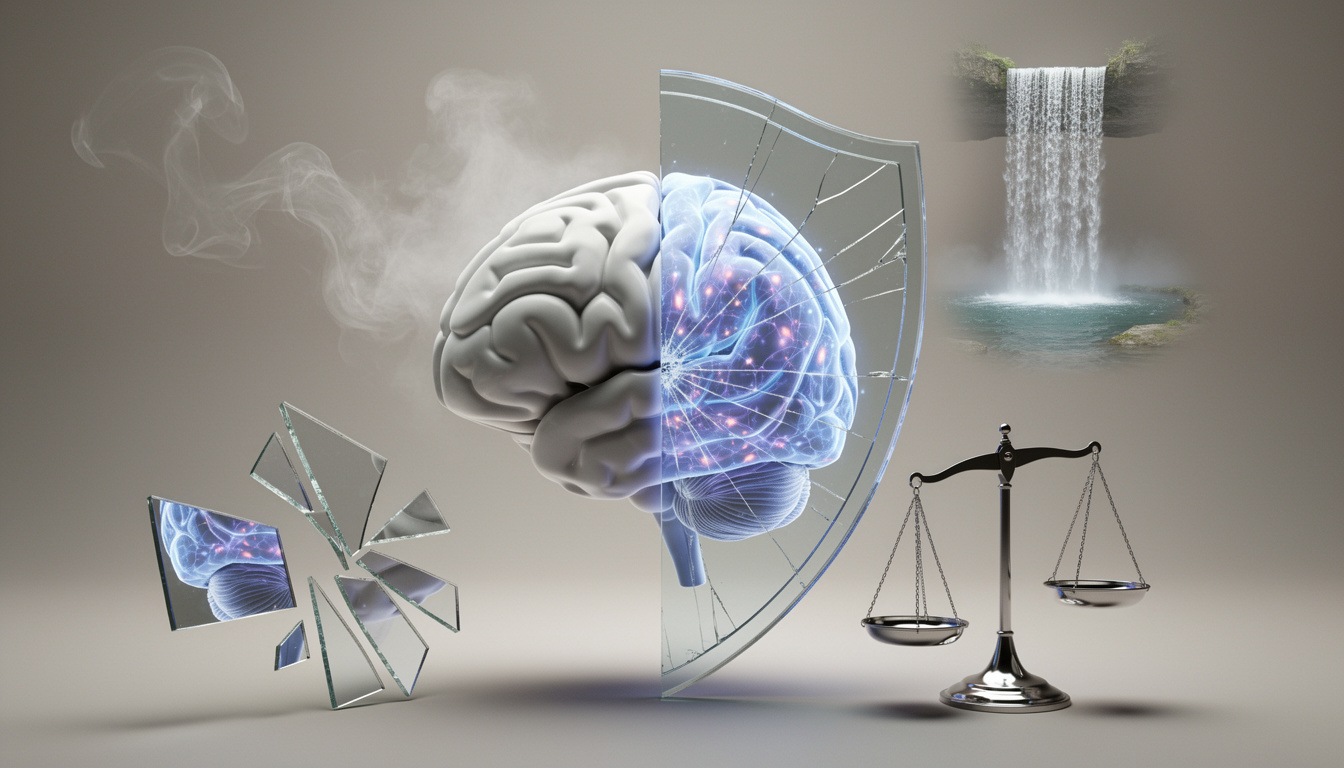
Faced with the ups and downs of modern life, our minds deploy a range of strategies to preserve our inner balance. Psychological defense mechanisms, mostly operating without our awareness, play a crucial role as emotional first aid. Whether it’s deflecting, rationalizing, or transforming a disturbing experience, our psychology is remarkably ingenious in coping with stress, fears, or conflicts. In 2025, in the era of ubiquitous mental health, understanding these strategies becomes essential for navigating human relationships, preventing emotional exhaustion, and developing greater self-awareness. This comprehensive analysis delves into the heart of our unconscious processes, detailing their evolution, the risks associated with excessive use, and the therapeutic promise of conscious awareness. Psychological defense mechanisms protect the mind from anxiety and painful emotions.
- They activate automatically and often operate in the unconscious. 🚧 Diversity
- andflexibilityin the use of these mechanisms promote good mental health.
- 🔍 Repression, projection, rationalization, denial, and reaction formation are among the most common. ⚠️ Their excessive or rigid use can lead to psychological disorders or relationship difficulties.
- 🧩 Identifying and understanding these psychological strategies paves the way for effective therapeutic work.
- 💡 Their emotional importance lies in their ability to adjust the perception of self, others, and the world. Understanding Defense Mechanisms: Definitions and Roots in Psychology Defense mechanisms are true sentinels of the psyche. They have been cataloged by psychoanalysis.
- At the beginning of the 20th century, these defenses remain key elements of psychological discourse today, whether one is a clinician in private practice, a parent, or an attentive teacher. Their distinctive feature? They operate, for the most part, unconsciously, like emotional reflexes that arise without premeditation. For example, when faced with bad news, one person might make a nervous joke (rationalization), while another denies the significance of the event (denial). This silent dance unfolds to reduce anxiety and avoid psychological suffering—the true priority of our minds. Following in the footsteps of Freud and then Anna Freud, other thinkers—such as Jean Bergeret, or clinicians of modern psychology—have enriched the catalog of defenses. According to Bergeret, it is the diversity, subtlety, and flexibility in the choice of strategies, and not their suppression, that guarantee adaptation and mental health. Conversely, the absence of these qualities opens the door to psychological disorders or chronic suffering, such as avoidant personality disorder or megalomania, where overly rigid mechanisms dominate the inner world. To grasp the dynamics of psychological defenses, it is essential to understand that their nature and intensity vary according to individuals, contexts, and also life stages. In children, certain strategies are rooted in the bond with the attachment figure, while in adults, they will adapt (or not) to social demands. For example, a business leader might rationalize a failure rather than admit a feeling of inferiority. In some cases, defenses evolve or alternate: a student facing an exam might initially deny their anxiety before suppressing their emotions to better focus on the task at hand. But do these protective mechanisms benefit only the individual? No, because they also structure social relationships, facilitating compromise and limiting aggression within the group. Imagine a conflict between colleagues: reactive training, which involves adopting an attitude contrary to one’s true feelings, can allow for the maintenance of a coexistence, however artificial, in the office. Contemporary psychology has highlighted their essential role in the cohesion and continuity of the self in an unpredictable environment.
In retrospect, the study of these mechanisms is no longer a matter of mere intellectual curiosity, but a vital necessity for better understanding our own behavior and that of others, preventing the emergence of serious disorders, and engaging in genuine personal development. A chart to better understand the major psychological defense mechanisms Mechanism Definition Concrete exampleEmoji
Denial Refusing to acknowledge the reality of a painful event or feeling Ignoring the announcement of a layoff as if it never happened 🙈 Projection
Attributing one’s own unacceptable feelings or desires to others
Suspecting those around you of being jealous when you are jealous yourself
🔄
Rationalization
| Justifying a situation or behavior by finding a logical explanation | Pretending that a lost job is an opportunity to explore other horizons (without truly believing it) | 📊 | Repression |
|---|---|---|---|
| Unconsciously setting aside or forgetting a painful thought or memory | No longer remembering a traumatic accident | 🤫 | Reaction formation |
| Expressing an emotion opposite to the one actually felt | Showing excessive affection to someone you dislike Secretly | 🎭 The main defense mechanisms in action: everyday examples and explanations | Psychological defense strategies are as varied as they are imaginative. In everyday life, everyone experiences, at one time or another, one of these unconscious reflexes. Take denial: faced with a difficult diagnosis, many patients react by refusing to accept the seriousness of the illness—a “no, it’s not possible!” that reflects a temporary distancing from reality. While this reflex may initially protect morale, it becomes detrimental when it becomes entrenched, delaying necessary decision-making. Projection, on the other hand, is particularly common during relationship tensions: for example, by accusing their partner of infidelity, a person may be masking their own unacknowledged desires. In the professional world, rationalization manifests as the ability to disguise failure, giving it a veneer of logic or necessity. A dismissed salesperson will explain that their dismissal was simply due to a bad period, while they feel (but won’t admit) the humiliation. |
| Repression, the cornerstone of emotional management, obscures certain memories or feelings too painful to allow them to continue their life’s journey. Many trauma victims thus consciously or unconsciously avoid discussing painful episodes, sometimes at the cost of other symptoms, such as somatization or anxiety disorders. | Another fascinating mechanism is reactive formation: this involves expressing, sometimes excessively, the opposite of what is experienced internally. A child jealous of a newborn will shower it with affection, or an adult in conflict with a colleague will doubt their sincerity all the more while showering them with attention. This strategy aims to conceal from oneself and others the true nature of one’s desires or feelings. | ||
| Thus, the vast gap between the visible and the invisible plays out at every stage of life, from infancy to retirement. Psychological studies in 2025 confirm the emotional importance of being able to identify these reflexes in order to better adjust them. In some cases, these defenses themselves become sources of difficulty, as demonstrated by the clinical profiles of narcissistic personality disorder or Munchausen syndrome, where the line between adaptation and pathology becomes blurred. The flexible use of defenses, key to psychological resilience: Within the family sphere, the alternation between denial, rationalization, and projection allows us to weather storms, the key being to be able to question the dynamics as circumstances dictate. The richer the mind’s repertoire, the greater its capacity to cope without succumbing. Conversely, rigidity (always using the same mechanism) exposes us to states of derealization or other disturbing manifestations, revealing the limitations of the defense system in place. | https://www.youtube.com/watch?v=MJrzGqTdBIM | Psychoanalysis, Attachment, and Development: The Construction of Defense Mechanisms | Why do we resort to projection rather than rationalization? This tendency is not innate but results from a long process of psychic maturation. The formation of defense mechanisms has its roots in early childhood, through the attachment relationship created between the infant and their security figure (often the mother). Projective identification, initially normal, allows for the communication of emotional feelings and adjusts the emotional synchronicity of the dyad. Gradually, the child introjects (internalizes) relational models, learning to defend themselves against frustration or absence. The phases of development require subtle adjustments at each stage: regression. |
| For example, it marks a return to previous behaviors in situations perceived as threatening. Faced with illness, loss, or in certain contexts of psychological fragility, individuals draw upon strategies acquired earlier to protect themselves. This is why some adults, overwhelmed by stress, become capricious or dependent again, as if reverting to a sense of childhood security. | According to the framework of psychotherapy, the more varied and conscious these mechanisms are, the better the person is able to cope with the challenges of relationships and life’s losses. The richness of this “toolbox” fosters resilience, a key term in the vocabulary of psychological well-being in 2025. | But what happens when this process breaks down? Pathologies often emerge from the excessive, exclusive, or rigid use of one or more defenses. The line, for example, between mental health and psychopathology lies in the ability, or inability, to adapt one’s strategies to the context. This explains the frequency of mechanisms like denial or projection in disorders such as |
depression
or the repetition of the victim role in the face of the world.Social mirror and adaptation: the importance of defenses in collective lifeIn society, the challenge lies in juggling expectations, frustrations, and aggressions, while preserving one’s self-image. People who manage to modulate their defense mechanisms will find it easier to adapt to new social roles, withstand criticism, or bounce back after a shock. Those who take refuge in rigid patterns become trapped in cycles of suffering or misunderstanding, as demonstrated by the dynamics of histrionic personality disorder or
Stockholm syndrome . https://www.youtube.com/watch?v=sTjrYSUXA1w Defense Mechanisms, Psychological Disorders, and Mental Health Implications
The overuse or inappropriate application of defense mechanisms exposes individuals to real risks to mental health. When projection, denial, or rationalization become the only coping strategies, individuals can no longer adapt their stance in the face of adversity. This rigidity fosters the development of disorders such as addictions, personality disorders, or behavioral problems (hypersexuality, depression, victimhood, etc.). By 2025, clinical observations indicate an increased prevalence of avoidance mechanisms among young people, with a tendency to flee (online!) or minimize emotional distress. Therapeutic work then consists of highlighting these protective scenarios, making them understandable, and expanding their scope to restore the capacity to react, feel, and transform. Becoming aware of these psychological roles allows individuals to break free from a cycle of unhealthy repetition and regain a sense of individual responsibility in building their own well-being.
Among the emblematic situations are difficulty grieving (where denial takes over), impulsive acting out (where reactive behavior masks a deeper unease), and chronic fear of abandonment (a sign of projected insecurity). Accepting that the mind processes reality in its own way ultimately offers the possibility of caring for oneself and others, in a process of continuous growth. List of typical manifestations of excessive defense mechanisms: 🙅 Refusal to acknowledge an obvious situation under the pretext of ignoring it (prolonged denial)
😤 Constant criticism of others without self-reflection (obsessive projection) 🔍 Perpetual and logical justifications for every unpleasant emotion or behavior (constant rationalization) 🎭 Inverted feelings in the face of a disturbing event (extreme reaction formation) 🕳️ Selective amnesia or memory gaps concerning painful episodes (pervasive repression)Expanding your toolbox: identifying, understanding, and adjusting your psychological defenses
Understanding psychological defense mechanisms is the first step toward better managing your own reactions. Learning to recognize these automatic responses allows you to break free from the emotional ruts in which you sometimes clumsily become mired. Various approaches, from meditation to transactional analysis, including psychotherapy, now support this process in 2025. Professionals encourage diversifying your internal responses, questioning inherited beliefs, and finding the right balance between tolerating suffering and committing to change.
Analyzing one’s emotional reactions in light of defense mechanisms opens a window onto deep-seated motivations, often hidden in the unconscious. Journaling, professional supervision, or inner dialogue can help uncover these mechanisms. What if, for once, rationalization became not a refuge, but a lever for conscious transformation? In short, investing in one’s psychological “toolbox” means rediscovering one’s own capacity for adaptation, honoring the complexity of one’s history, and perhaps even beginning to write new, freer, and more aligned chapters in the novel of one’s psychological life.
Awareness often arises from a feeling of disconnect between what we truly feel and what we show to others. When an unwanted emotion or thought is regularly minimized, transformed, or attributed to external factors, it’s highly likely that a defense mechanism is at play. The help of a therapist can also facilitate the identification of these unconscious behaviors.
Should these psychological mechanisms be completely eliminated? No, their elimination is neither possible nor desirable. Defense mechanisms are essential for psychological balance. The important thing is to enrich and diversify the repertoire used in order to adapt harmoniously to each situation, while limiting the rigidities that lead to suffering. What is the difference between coping and a defense mechanism? Coping is a conscious strategy aimed at managing stress or difficulty, while a defense mechanism is often unconscious. Defense mechanisms act to protect the mind from internal conflicts, while coping involves voluntary action in the face of an external obstacle. Does excessive reliance on defenses contribute to the development of disorders?Yes, rigid or excessive use of certain defense mechanisms can contribute to the development of psychological disorders such as anxiety, depression, or certain personality disorders. Flexibility and a variety of responses are indicators of good mental health.How can we balance our defenses for better mental health?
Observing one’s reactions, regularly reflecting on one’s emotional experiences, and working with a facilitator in psychotherapy allow for a gradual adjustment of one’s defenses. Practicing mindfulness and expanding one’s emotional range are concrete ways to gain balance and authenticity.