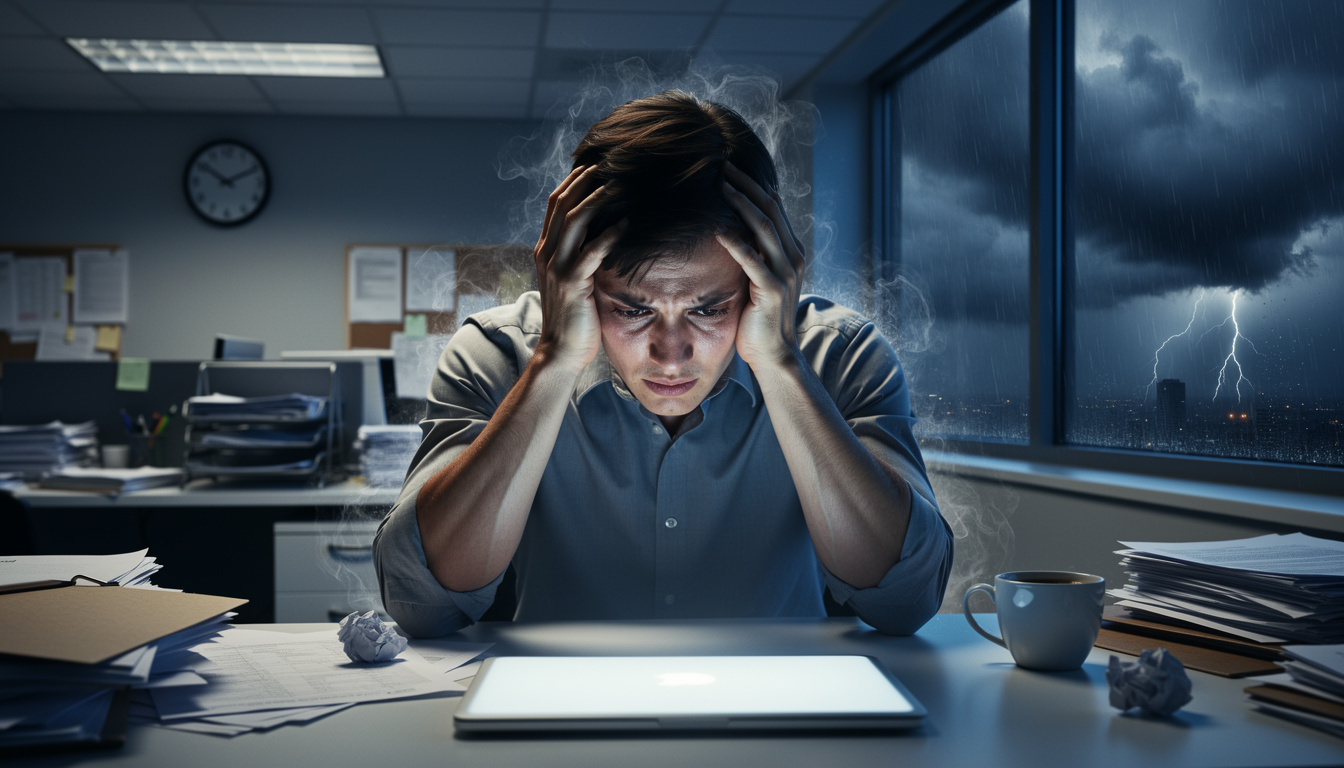
Stress is everywhere: at home, at work, or even during moments of relaxation when we allow ourselves to daydream. Long perceived as a mere companion of our modern lives, it silently erodes our serenity and can permanently damage our health. Behind the rise in anxiety, persistent fatigue, or insidious physical ailments, stress acts as the conductor of a multitude of symptoms. Recent studies confirm that more than half of the French population—with a higher incidence among women and young people—have experienced heightened stress in recent years. From the infamous “burnout” to acute reactions after a traumatic shock, its impact on mental and physical health is now undeniable. Exploring its mechanisms and effects is, above all, about opening the door to a better understanding of our inner balance and (re)discovering new strategies for building our psychological and physical resilience.
- ⚠️ 59% of French people report feeling stressed by 2025, a significant increase since 2017.
- 💢 Stress impacts both mental health (anxiety, depression, attention deficit disorders) and physical health (blood pressure, digestive problems, weakened immunity).
- 🔄 The causes are numerous: work life, personal difficulties, unforeseen events, or trauma.
- 🧠 Cortisol and adrenaline orchestrate the body’s responses… but their prolonged excess exhausts our system.
📝 The manifestations of stress can be physical (headaches, fatigue…), psychological (loss of motivation, sadness), or behavioral (isolation, addictions, snacking).
🍀 Solutions exist: physical activity, heart coherence techniques, cognitive therapies, psychological support, neuroscientific innovations… 🔥 Knowing how to recognize warning signs and seeking help when necessary helps preserve your mental and physical health.
Understanding the mechanisms of stress and their impact on health
Behind every bout of anxiety or unexplained fatigue, there is often an alarm signal sent by our body in response to a situation perceived as threatening. Stress doesn’t choose its timing or its form: sometimes motivating, sometimes destructive, it manifests itself through complex mechanisms. At the slightest alert—whether it’s an urgent file at the office or a family argument—the brain activates the hypothalamic-pituitary-adrenal (HPA) axis in a fraction of a second. This machinery triggers the release of adrenaline and then, if the pressure persists, cortisol. These two hormones prepare our body for action: a racing heart, rising blood pressure, muscles in survival mode—everything becomes energy in service of our immediate safety.
A student facing an exam, a nurse struggling with an overloaded workload, or a mother juggling children and financial obligations: everyone reacts differently. As the weeks go by, fatigue accumulates, attention wanes, memory falters, and physical ailments emerge where they were least expected. This diversity of responses is explained by the complex interplay between our past experiences, our genetics, and our environment. Neuroscience has clearly demonstrated that mental and physical health are inextricably linked, both weakened when pressure becomes chronic. Recognizing this biological dynamic is already a step toward finding solutions. Because while, in the short term, acute stress provides a boost—a kind of positive adrenaline rush—its chronic excess leads to weariness, nervousness, and even withdrawal. In a society where performance is paramount, it becomes essential to learn to decode these signals to avoid the “silent wear and tear” that experts talk about, which can permanently damage our overall well-being. Body and Psychological Signs of Stress: Conducting an Inner InvestigationThe symptoms of stress sometimes reveal themselves subtly. From a slight headache to a tightness in the chest, from passing nervousness to social isolation, it is sometimes difficult to connect them to mental overload. Yet, these signals are invaluable. A classic clinical picture includes sleep disturbances, muscle pain (particularly in the back or neck), digestive problems (nausea, constipation, diarrhea), palpitations, and chronic fatigue. And the consequences don’t stop there: the skin is also affected, as evidenced by eczema or psoriasis flare-ups, sometimes coinciding with episodes of intense stress.
The example of Anaïs, a young corporate executive, illustrates how thin the line is between acute and chronic stress. After several months of pressure at work, she developed insomnia, abdominal pain, and underlying anxiety. This is a classic pattern observed in stress management clinics, as shown by studies on adaptation syndrome. Specialists emphasize the importance of not neglecting these symptoms, which are considered warning signs to be taken seriously.
The causes of stress throughout life and their visible symptomsEvery individual lives in an environment full of challenges. For some, stress stems from an excessive workload, a sudden change, or even a happy but destabilizing event. For others, it arises from financial difficulties, managing children, or a strained relationship. Academics distinguish between external causes (social pressures, performance expectations, traumatic events) and internal factors, such as perfectionism or low self-esteem. Among the major sources of stress in 2025 are professional life (and the pressure of “always faster”), financial worries, and the quest for balance between all aspects of life. Work-related stress, a true modern scourge, leads some to experience burnout or its opposite, boreout, due to boredom or a disconnect from meaning at work. At the other end of the spectrum, “good stress” exists: the adrenaline rush of a competitive athlete or the excitement of a new project. But even this energy, if it transforms into continuous pressure, can become toxic. Post-traumatic stress disorder is also a significant factor, associated with violent or unexpected shocks, often leading to flashbacks, nightmares, and hypervigilance, as illustrated by documented cases of post-traumatic stress disorder.
People who are most sensitive to social expectations, or who have a history of anxiety or depression, react more strongly to shocks and changes. Their mental health is often weakened in the long term as a result.
The symptoms themselves take many forms: persistent fatigue, decreased motivation, irritability, eating disorders, withdrawal, or a desire to avoid social contact. Others, on the contrary, compensate with addictive behaviors (tobacco, alcohol, snacking). Stress is therefore not just a matter of nerves: it is inscribed in the body, in our psychology, and even in our daily habits. Effective management involves recognizing these signals and adapting our reactions. The key? Understanding that everyone has their vulnerabilities, and that resilience is cultivated by attentively listening to our own limitations. Physical, Psychological, and Behavioral Symptoms Not to Be Underestimated
The sheer number of warning signs can be surprising: insomnia, migraines, unexplained pain, or changes in appetite—every detail counts. Psychologically, the spectrum is vast: irritability, anxiety, decreased interest, difficulty concentrating, or faltering memory. Behaviorally, isolation and a drop in work performance become markers to monitor closely.
The Effects of Chronic Stress on Physical Health: Understanding the Risks
When chronic stress takes hold, the entire body suffers. The cardiovascular, digestive, immune, and hormonal systems all suffer the wear and tear caused by the constant influx of adrenaline and, above all, cortisol. In practical terms, blood pressure rises, the risk of heart problems increases, and muscles tense to the point of depleting energy reserves. Over time, this promotes hypertension, arteriosclerosis, and even the risk of heart attack in predisposed individuals.
The digestive system is not spared either: irritable bowel syndrome, gastritis, ulcers, and digestive issues illustrate the impact of stress on our “second brain.” The links between gut microbiota and mental health are now well-established, reminding us that psychological balance also depends on paying attention to the gut. But that’s not all: weakened immunity, recurring infections, and dermatological or gynecological conditions further lengthen the list of possible consequences. Even certain disorders such as fibromyalgia or rheumatoid arthritis can be exacerbated during periods of prolonged stress.
Concrete examples, like the case of Clément, 47, who works in the banking sector, remind us how vital “letting go” becomes. After a burnout, Clément had to rethink his work methods, adopt stress management routines, and consult a professional to learn new relaxation techniques. Without this awareness, the risks to physical health quickly become significant.
| Medical monitoring, support measures, and information about the long-term effects of cortisol are essential to avoid a vicious cycle. The range of symptoms—musculoskeletal pain, skin conditions, or chronic digestive problems—demonstrates this profound connection between mind and body. Recognizing that taking care of one’s mental health also means protecting one’s physical health marks the first step in an effective and informed preventative approach. | Comparative Table of the Effects of Acute and Chronic Stress on the Body | |
|---|---|---|
| ⏳ Type of Stress | ✨ Body Response | 🏥 Main Consequences |
| Acute Stress 🚀 | Rapid release of adrenaline, heightened alertness, increased energy | Surge in performance, rapid reaction to danger, temporary effects |
Chronic Stress 🧨
Prolonged cortisol secretion, depletion of the body’s reserves
Fatigue, hypertension, immune disorders, anxiety/depression, burnout
Stress, Mental Health, and Cognition: The Vicious Cycle The shadow of stress creeps into the recesses of the mind. Long considered an almost “normal” phenomenon, it is now recognized as one of the main drivers of anxiety, depression, and cognitive disorders. In people exposed to chronic stress, emotional and cognitive processes falter. Memory, concentration, and even decision-making are affected by excess cortisol, which alters the very structure of brain regions such as the hippocampus or the amygdala.Burnout, now rightly described as an occupational disease, illustrates this insidious progression. This profound fatigue manifests as emotional exhaustion, demotivation, decreased performance, and an overall loss of interest. According to the World Health Organization, nearly 44% of workers in the most exposed sectors show signs of severe stress or burnout.
.
On a behavioral level, the negative spiral is very real: isolation, disengagement from activities, risky behaviors, and self-medication are added to the list. Since mental health is intrinsically linked to physical health, a holistic approach is essential: addressing anxiety, depression, or post-traumatic stress is crucial for regaining balance. Articles in
modern psychology
remind us that this is a journey that begins with recognizing and then managing one’s own vulnerabilities.
Mental resilience: a challenge of the century
Faced with the proliferation of stressors, resilience has become an indispensable tool. This concept, once reserved for clinical psychology, is now present in all sectors: education, business, sports, human relations, and more. It involves developing the capacity to absorb shocks, adapt, and learn from difficult experiences to move forward.
Public campaigns, prevention programs, mindfulness workshops, and meditation practices—the range of options is constantly expanding, spreading wherever the need to calm the mind is felt. Resilience isn’t innate, but it’s built through learning self-observation, questioning negative patterns, and using relaxation techniques or regular physical exercise. The story of Lucas, a young entrepreneur from Lyon, demonstrates that overcoming intense professional challenges is also a matter of internal resources and a supportive environment. After a difficult period, he restored balance by establishing a fitness routine and consulting a psychologist specializing in stress management. Similar stories abound on social media and specialized platforms, proving that access to information and support is now a considerable asset. Prevention, management, and therapeutic innovations in the face of stress: Stress doesn’t have the last word! Recent advances in neuroscience and psychology offer a wealth of concrete ways to regain control and energy. Physical exercise, first and foremost, acts as a powerful regulator of cortisol, promoting the production of endorphins, also known as “happiness hormones.” Practiced for at least half an hour a day, it restores mental balance and improves sleep quality. Heart coherence and biofeedback are now being used in hospitals and coaching practices. By controlling breathing and observing certain parameters in real time (heart rate, blood pressure), these techniques allow for the “reprogramming” of the nervous system. The results are measurable: reduced anxiety, better emotional control, and a decrease in sleep disturbances.
The
- Complementary approaches, such as taking omega-3 and magnesium supplements, are generating increasing interest, particularly among those reluctant to use conventional medication. Of course, psychotropic medication may be necessary in some cases, in addition to psychotherapy or personalized support.
- Cognitive behavioral therapies dominate the field of stress management: they address negative thoughts by replacing them with more adaptive and resilient patterns. Mindfulness and meditation positively influence brain structure, promoting neuroplasticity and emotional regulation. Technological innovations are also making their mark: virtual reality, neurostimulation, and support via mobile applications are all effective ways to assist people suffering from chronic stress.
- This array of solutions empowers everyone, regardless of their background, to take charge of their well-being. Stress, far from being inevitable, is now an opportunity to rethink your life, to experiment, and above all, to rediscover joy where it may have been buried by routine.
- 🏃♂️ Physical exercise (walking, yoga, team sports)
- 🌬️ Heart coherence or conscious breathing
🧘♀️ Mindfulness meditation or guided relaxation
🗂️ Time management and task prioritization
🤝 Psychological support and a caring environment
| 🔬 Thoughtful use of therapeutic solutions (CBT, medication, etc.) | The contribution of neuroscience and future therapeutic avenues | Scientific exploration has not yet exhausted the possibilities of tackling stress. Virtual reality is emerging as a tool for desensitizing oneself to anxiety. Transcranial neurostimulation offers new perspectives for mood modulation and enhances the effectiveness of traditional approaches. Research on the gut microbiota is paving the way for the use of specific probiotics, capable of positively influencing emotional regulation and preventing anxiety and depressive disorders. |
|---|---|---|
| This surge of innovation is combined, in practice, with personalized support from multidisciplinary teams, ranging from general practitioners to stress management specialists, not forgetting the essential contributions of family and friends. | ||
| 💡 Approach | 🏆 Strengths | ⏳ Limitations |
| Physical Exercise 🏃 | Reduces anxiety and fatigue, improves overall health | Requires consistency, risk of injury |
| Mindfulness 🧘 | Builds resilience, lowers cortisol | Requires learning, long-term results |
Psychotropic Medications 💊 Relieves acute symptoms, facilitates stabilization Possible side effects, requires strict medical management
Biofeedback 💻
Rapid, visible, and engaging self-regulation
Specific equipment, requires skill development
For further information, consult the resource on
new complementary approaches
for anxiety and stress-related pain.
What are the early warning signs of chronic stress?
Early signs include persistent fatigue, unusual irritability, sleep disturbances, unexplained pain, decreased motivation, or social withdrawal. Identifying these indicators early helps prevent the worsening and chronicity of the condition.
Is it possible to completely recover from chronic stress?
Full recovery depends on how quickly treatment is received and the severity of the condition, but most people regain balance with appropriate strategies: physical activity, psychological support, lifestyle changes, and sometimes medication. The most important thing is to act early and not hesitate to ask for help.